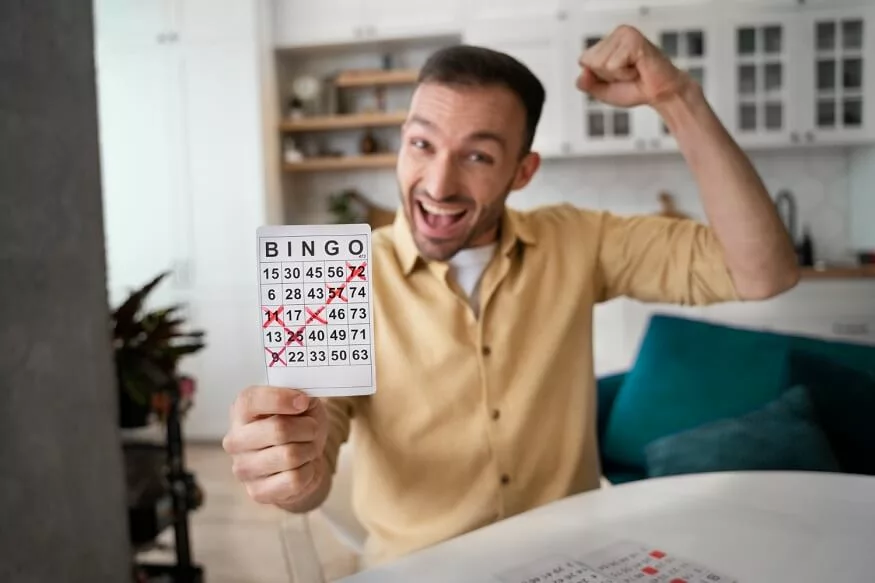
To anyone who has never sat inside a bustling bingo hall, the pastime can look deceptively simple from a distance. Skeptics see rows of players looking down at paper cards, mechanically stamping ink circles while an announcer reads random combinations from a cage. They assume the experience is quiet, predictable, and devoid of the dynamic drama found at a blackjack table or in a sports stadium.
Step across the threshold of a live game, however, and that assumption disintegrates. A bingo session is a masterclass in calibrated tension. It is a shared psychological drama structured in miniature chapters, moving from the sociable buzz of the opening minutes to the heart-pounding suspense of a sudden-death finish. Understanding why bingo has captured generations of loyal players requires looking past the printed grids to examine the emotional momentum that builds between the very first ball drawn and the triumphant shout that brings the room to a standstill.
The Opening Chute: Setting the Rhythm and the Stakes
Every round begins with an abrupt transformation of the room. Moments before the schedule resumes, the hall is alive with conversation. Neighbors catch up on family news, compare notes on lucky card colors, and prep their tables with snacks, lucky charms, and an array of ink daubers.
Then comes the sound that instantly shifts the room: the whir of the mechanical blower kicking into gear, sending lightweight plastic spheres tumbling in their transparent housing. The microphone clicks, the chatter cuts off mid-sentence, and absolute focus descends across the tables.
The caller announces the first combination—perhaps “B-9” or “O-68.” A crisp collective echo of stamping sounds ripples through the air. In these opening turns, the game feels light and full of possibility. Every card on the table is clean, every player holds an equal theoretical shot at the jackpot, and the possibilities remain wide open. Players scan their layouts with relaxed confidence, getting into the groove of the caller’s cadenced delivery.
The Cadence of Anticipation: Micro-Moments and Tactile Engagement
What distinguishes bingo from passive forms of gambling, such as pulling a digital slot lever, is the active physical involvement required on every draw.
The caller draws a number roughly every ten to fifteen seconds. That interval creates an addictive feedback loop. You hear the letter and number, your eyes flick across the designated columns, your brain processes the spatial arrangement of your sheets, and your hand delivers a definitive stamp of ink.
Because modern sessions often involve playing multiple faces at once, this is not a passive waiting game; it is an exercise in rhythmic visual scanning and manual dexterity. Each dab provides a miniature burst of satisfaction. It offers visible, tangible proof of progress. With every stamped number, a chaotic collection of scattered marks begins to take shape into a recognizable pattern—a diagonal line, a postage stamp, or the jagged boundary of an outside frame. The game builds its momentum not in sudden leaps, but through a steady, relentless accumulation of small victories.
Sitting on One: The Psychology of the Waiting State
As the caller moves past the tenth and fifteenth numbers, the energy in the room changes. The casual ease of the early minutes evaporates, replaced by a dense, electric quiet. Players lean forward over their desks. Hands grip daubers a little tighter.
This is the phase of the game seasoned regulars refer to as being “on the brink” or “waiting.”
You are no longer looking for five or six random digits; your entire focus has narrowed to a solitary number. Perhaps you need G-54 to finish a double line, or N-38 to complete a blackout worth thousands of dollars. The moment you are one square away from a win, the psychological stakes skyrocket.
Every subsequent call carries unbearable suspense:
-
The caller announces “G,” and your heart skips a beat before they finish with “49,” causing a quiet, inward wince.
-
The caller draws from the “N” column, missing your square by two digits, prolonging the agony.
-
You glance around the room, acutely aware that several dozen other people are sitting in the exact same state of high-alert anticipation.
In probability terms, the odds of your specific number dropping next remain small, but the human brain does not process the situation through sterile formulas. It perceives closeness. The visual proximity of an almost-finished pattern tricks the mind into feeling that victory is imminent, driving adrenaline through the roof with every sphere that rolls up the plastic chute.
The Communal Arena: Shared Tension and Collective Breath
One of the most fascinating aspects of bingo is the paradoxical relationship between opponents. Every person in the hall is technically competing for the same finite prize pool. If someone else calls out, your winning opportunity on that card instantly dies.
Yet despite that direct financial opposition, a bingo hall operates as a unified collective. Everyone in the room is subjected to the exact same unpredictable sequence of draws. Because players experience the same sequence of near-misses and fortunate drops simultaneously, the hall develops a shared physical pulse.
When the caller draws three consecutive numbers in a neglected column like “I,” a low, collective sigh ripples across the floor. When an obscure number that everyone has seemingly been hunting for finally drops, you can hear a synchronized intake of breath. You are competing against the people sitting to your left and right, yet you are completely bound to them through shared tension. It creates an atmosphere of communal camaraderie rarely found in solitary casino environments.
The Explosion of the Call and the Release of Tension
The climax of a bingo game is unlike any other moment in gaming. There is no subtle nod to the dealer, no quiet exchange of chips, and no gradual realization of success.
The climax is explosive: the shout of “Bingo!” slicing through the silence.
The effect of that shout is instantaneous. The caller freezes mid-motion, immediately keeping the next ball inside the chamber. The collective tension in the hall snaps like a drawn bowstring. A mixture of groans, disappointed laughs, and congratulatory remarks breaks out across the floor as players slump back into their chairs, finally exhaling breaths they had been holding for three consecutive calls.
Then comes the verification procedure. A floor runner rushes to the claimant’s table, checking the serial number printed on the card face against the caller’s master computer console. The entire room waits in suspended animation during this brief ritual. If the numbers check out, the caller announces the card valid, applause breaks out, and the cash is awarded.
If the call was mistaken—a premature shout born of adrenaline and misread numbers—the caller announces the error, the room erupts in renewed cheers, and the chase resumes with redoubled fury.
The Enduring Pulse of the Game
From the mechanical churn of the opening blower to the sudden finality of the winning cry, bingo succeeds because it structures human excitement with remarkable purity. It strips away complicated betting tiers and impenetrable rules, leaving behind an accessible, high-tempo journey of anticipation, tactile participation, and shared human drama. Whether played on classic newsprint sheets under fluorescent lodge lights or on vibrant electronic displays, the magic remains unchanged: the enduring, universal thrill of chasing that one final square.