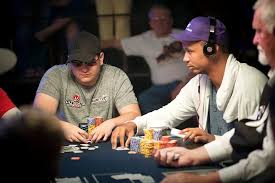
Every regular cardroom features at least one player who commands universal respect for their raw talent. They read board textures effortlessly, exploit subtle physical timing tells, and routinely make hero calls that leave the rest of the table shaking their heads. Yet six months later, their seat is vacant, their name has vanished from the sign-up board, and quiet rumors circulate that they went broke over a single rough weekend.
Poker history is littered with brilliant tacticians who lacked basic financial discipline. The uncomfortable truth of the game is that technical mastery—memorizing pre-flop ranges, calculating equity on complex turns, and balancing bet sizing—accounts for only half of a player’s long-term expectation. Without a disciplined framework for capital preservation, even the sharpest strategic minds eventually succumb to statistical reality. Bankroll management is not an administrative chore or a restrictive set of rules; it is the structural scaffolding that protects your mental state, preserves your strategic freedom, and turns a volatile gamble into a sustainable, deeply engaging craft.
Building an Impenetrable Firewall Between Life and the Felt
The first transformative benefit of disciplined bankroll management is the emotional peace that comes from absolute separation. A genuine poker bankroll is money set aside exclusively for the game. It is not rent money, emergency medical savings, vacation funds, or an investment portfolio. It functions strictly as working capital, akin to inventory in a retail business or seed money for an independent enterprise.
When you sit down with money you cannot afford to lose, every pot carries existential weight. A bad beat on the river ceases to be an expected statistical hiccup; it turns into a missed car payment or an uncomfortable conversation with a spouse. That kind of pressure introduces emotional toxicity that compromises your judgment before the dealer even cuts the deck.
By establishing a dedicated, self-contained bankroll, you create a psychological buffer. Losing three buy-ins on a Tuesday evening is no longer a domestic crisis. The chips on the felt represent game tokens derived from a dedicated fund designed explicitly to absorb shocks. This separation allows you to walk away from the table, close the door, and rejoin daily life without carrying residual financial panic into your home or your workplace.
Neutralizing Scared Money and Reclaiming Your Strategic Edge
In poker parlance, few conditions are as lethal to performance as playing with scared money. When your stake represents a disproportionate percentage of your total available gambling funds, your risk tolerance plummets, and your strategic agency collapses along with it.
Consider how a modern, aggressive game plays out. Profitable poker demands pulling the trigger in uncomfortable spots. It requires triple-barrel bluffing when a runout favors your perceived range, making light value bets on coordinated rivers, and calling down large wagers when pot odds dictate that an opponent is bluffing often enough.
When you are severely under-rolled, fear consistently overrides mathematics:
-
You check back river turns where a thin value bet is mathematically mandatory, surrendering critical long-term equity.
-
You fold the best hand to heavy river aggression because the prospect of losing your entire stack feels paralyzing.
-
You pass on highly profitable multi-way pots simply because the variance is too violent for your fragile reserve.
Proper bankroll management is what enables fearless, mathematically sound execution. When you know that an individual buy-in represents merely one or two percent of your total reserve, the threat of losing that single stack loses its bite. You can make the correct play with a steady pulse, completely unbothered by the short-term financial outcome.
Absorbing the Brutal Physics of Variance
Recreational players often view downswings as personal affronts or evidence of poor play. In reality, downswings are baked directly into the mathematics of probability. Even an elite player running an exceptional win rate of ten big blinds per hundred hands over a massive sample will regularly endure stretches where they lose fifteen or twenty buy-ins consecutively through sheer distribution of the cards.
Without a substantial buffer, these inevitable downswings lead to complete financial ruin. A bankroll operates as a financial shock absorber. When cold decks and cracked sets arrive—and they always do—a well-calibrated bankroll allows you to ride out the storm without altering your baseline strategy or experiencing an existential crisis.
Calibrating Buy-Ins Across Different Formats
Different poker formats carry wildly divergent variance profiles, meaning a one-size-fits-all rule fails in practice:
-
Live Cash Games: A standard recommendation for recreational cash game players is maintaining at least 20 to 30 full hundred-big-blind buy-ins for your target stake. Semi-professionals and professionals typically expand this cushion to 50 or even 100 buy-ins to withstand dry spells while covering living expenses.
-
Multi-Table Tournaments (MTTs): The mathematics of tournaments are notoriously brutal. Massive field sizes and top-heavy payout structures mean that even the best tournament players can go months without a significant cash. A robust tournament bankroll requires anywhere from 100 to 300 average buy-ins depending on field size. Playing sixty-dollar tournaments with an overall bankroll of two thousand dollars is an almost guaranteed recipe for eventual ruin.
Treating Stakes as an Elevator, Not a Status Symbol
One of the greatest psychological hurdles in poker is detaching self-worth from stake size. Many players treat moving up in stakes as a permanent promotion and view moving down as a humiliating demotion.
Disciplined bankroll management reframes the stakes ladder not as a hierarchy of personal prestige, but as a fluid elevator. You move up when your bankroll expands through profit and proven win rates; you move down when your cushion shrinks through negative variance or poor play.
Adopting a dynamic buy-in threshold strips the shame out of stepping down. If your rule dictates that you must drop from $2/$5 to $1/$2 if your reserves dip below twenty buy-ins, you make the switch automatically, with the clinical precision of an accountant balancing a ledger. Moving down preserves your remaining capital, rebuilds your confidence against softer competition, and ensures you remain in the game. The table does not care about your ego, but your bankroll definitely does.
At its highest level, poker is not a game of individual hands, dramatic river calls, or weekend windfalls; it is a long-term investment in probability, emotional control, and pattern recognition. The players who sit at the felt decade after decade are rarely the wildest bluffers or the loudest personalities. They are the ones who treat their capital with enduring respect, insulate their personal lives from table variance, and maintain the humility to let mathematics dictate their limits. Managing your bankroll does not just protect your wallet; it liberates your mind to enjoy the game for what it truly is: an endless, fascinating intellectual pursuit.