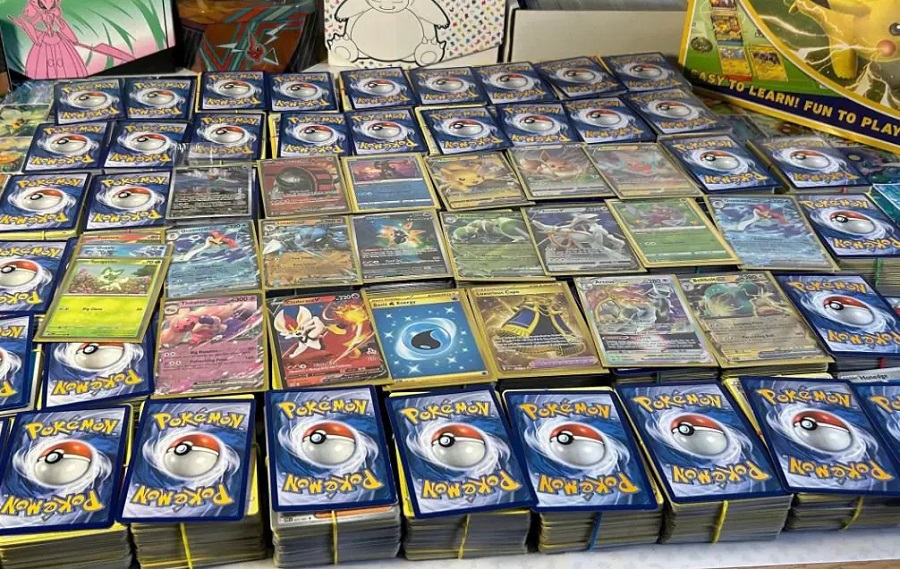
Every seasoned trading card collector knows the moment of reckoning. It usually arrives when opening a closet door requires bracing for an avalanche of holiday tins, shoe boxes, and half-empty booster boxes. What began as a few casual pack openings or a couple of draft weekends eventually morphs into a five-figure mountain of commons, uncommons, duplicate base cards, and forgotten foil inserts.
Confronting twenty or thirty thousand loose cards creates immediate cognitive fatigue. When faced with piles that take up half a living room, most collectors freeze because they attempt to organize everything simultaneously. The secret to mastering massive bulk is abandoning the idea of sorting alphabetically on day one. Instead, turning disorganized cardboard into a searchable, high-utility library requires a phased funnel, the right hardware, and the discipline to cull what you will never realistically need.
Prepare the Workspace and Gather Storage Hardware
Sorting trading cards requires dedicated horizontal real estate. Attempting to organize thousands of cards on a cluttered desk or on living room carpet guarantees bent corners, dropped stacks, and lost patience. Clear a large dining table or folding work surface, ensure overhead lighting is bright and glare-free, and set up a staging area that can remain undisturbed for several sessions.
Before touching a single card, assemble proper storage supplies:
-
Multi-row storage boxes: Corrugated cardboard monster boxes—specifically four-row 3,200-count or five-row 5,000-count boxes—provide the most cost-effective, space-efficient foundation for bulk.
-
Rigid card dividers: Tall plastic or heavy cardstock dividers that extend above the card line allow you to label categories without writing directly on storage boxes.
-
Sorting trays or card caddies: Slanted plastic sorting trays with twelve to fifteen compartments dramatically accelerate quick distribution.
-
Basic protection: Keep a brick of inexpensive penny sleeves and a pack of semi-rigid holders nearby for surprise finds during the sorting process.
Avoid plastic storage tubs with rounded interior corners or deep ridges along the bottom. Stacking cards directly against contoured plastic causes warped edges and bent corners under the weight of upper layers.
The Three-Pass Sorting Funnel
The single biggest mistake collectors make is trying to achieve micro-level precision on their first run. If you attempt to arrange cards by set number or alphabetical order immediately, a five-thousand-card box will take days to process. Instead, work through three distinct passes that narrow the scope at each step.
Pass One: The Value and Rarity Skim
The initial pass is all about triage. Slide cards rapidly through your fingers, pulling out anything that does not belong in general bulk:
-
Foils, alternate-art variants, and numbered parallels
-
Secret rares, ultra rares, and vintage base cards
-
Playable format staples, high-utility sideboard cards, or key rookies
Set these aside for proper protection immediately. Slip playable staples and minor hits into fresh penny sleeves and file them in a binder or a dedicated two-row collection box. Your remaining pile should now represent pure, low-liability bulk that can be handled quickly without anxiety over minor surface scratches.
Pass Two: Broad Separation
Once high-value cards are isolated, divide the bulk into broad macro-categories. For sports cards, this typically means separating by sport, manufacturer, and broad era. For trading card games like Magic: The Gathering or Pokémon, this means grouping by color, card type, or specific expansion set.
Do not worry about specific numbers or alphabetizing during this phase. Simply drop each card into its corresponding broad bin or tray slot. A good cadence allows you to sort hundreds of cards in minutes because your brain is only making a binary or four-way decision with every draw.
Pass Three: Fine Indexing
Only when your collection is grouped by expansion set, team, or color identity should you execute the final organization. For modern TCGs, arranging cards in set-number order is almost always superior to alphabetical sorting. Set numbers naturally group cards by rarity and color identity, matching the official checklist printed in collector manuals and online databases. For sports cards, sorting by team or year-and-card-number provides the cleanest retrieval structure.
Structuring Storage for Retrieval and Preservation
A bulk collection is useless if finding a specific card requires opening six unmarked boxes. As cards enter their permanent monster boxes, label every row with precision using repositionable archival tape or drop-in divider headers.
Pay close attention to packing density. Cards in multi-row boxes must sit snugly enough to remain upright, but loose enough to slide freely between your thumb and forefinger. Stacking cards too tightly crushes corners and risks surface sticking under ambient humidity. Conversely, packing rows too loosely causes cards to lean and bow over time under their own weight. Use foam spacers, empty plastic deck boxes, or folded cardboard inserts to support incomplete rows and prevent leaning.
Store your sorted monster boxes in a climate-controlled room off the floor. Basements, attics, and garages subject cardboard to temperature swings and moisture absorption that cause curling and mold growth.
The Culling Strategy: Trimming the Fat
No deck builder or sports collector needs forty-five copies of an identical modern common. Keeping endless duplicates drains your storage capacity and turns an organized collection back into an unwieldy mess.
Establish an uncompromising playset limit:
-
For TCG players: Retain a playset of four copies (or three for games like Yu-Gi-Oh), plus two extra copies of prominent tournament staples.
-
For sports card collectors: Keep your cleanest base copy of established stars and a small reserve of top rookies, then release the remainder.
Everything beyond your retention ceiling is excess inventory. Group this true surplus into bundles of one thousand and sell them as flat-rate bulk lots online, submit them to local game stores for store credit, or donate them to children’s hospitals, library gaming clubs, and community centers. Thinning your collection keeps physical volume manageable while generating funds for future acquisitions.
Establishing an Intake Protocol
The moment your bulk collection is pristine, a new challenge begins: keeping it that way. Every booster box release, draft evening, and collection purchase threatens to dismantle your progress if incoming cards are left in loose piles around the room.
Designate an intake station—a single two-row shoebox reserved exclusively for unsorted acquisitions. Whenever new cards enter your home, place them directly into the intake box. Once that container fills, run it through your three-pass funnel and integrate the sorted cards into your primary catalog. By treating organization as an ongoing intake rhythm rather than an emergency clean-up, your collection remains accessible, functional, and clean for years to come.