
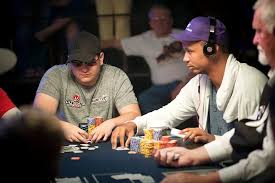
In today’s data-driven poker environment, success no longer depends solely on probability charts or balanced strategies. The best players in the world now combine behavioral economics — the science of human decision-making — with advanced game theory to gain psychological leverage over their opponents. Poker has become a battle not only of hands but of minds, where understanding why people make certain decisions is as valuable as knowing what those decisions will be.
The Psychological Core of Modern Poker
For decades, poker was viewed as a game of math, intuition, and reading tells. However, as solvers and GTO (Game Theory Optimal) play became mainstream, the edge from purely mathematical play diminished. Top players started looking elsewhere for an advantage, turning to behavioral economics to understand the underlying patterns of human bias and emotional response.
Behavioral economics studies how emotions and irrational tendencies influence decisions, especially under risk. In poker, every bet, bluff, and fold is influenced by these biases. Professionals now actively exploit predictable reactions — using them to manipulate table dynamics and create profitable spots against otherwise skilled opponents.
Loss Aversion: The Fear That Shapes Decisions
One of the most powerful concepts in behavioral economics is loss aversion — the idea that people feel the pain of losing more intensely than the pleasure of winning. In poker, this manifests in players who become overly cautious after losing a big pot or who chase losses to avoid admitting defeat.
Elite professionals exploit loss aversion by applying consistent pressure at moments of vulnerability. After a significant loss, many opponents subconsciously tighten up, folding hands they’d normally play. A sharp pro recognizes this and begins widening their bluff range, attacking with aggression when the opponent is mentally unprepared to defend.
Conversely, some players tilt in the opposite direction — chasing losses in an effort to “get even.” Professionals exploit this revenge tilt by trapping these players with strong hands, allowing their emotions to lead them directly into mistakes.
Anchoring Bias and Bet Sizing Manipulation
Another critical bias in poker is anchoring, where a player’s perception of value is skewed by initial information. For example, if a player consistently sees small continuation bets, a sudden overbet appears much stronger, even if it’s balanced.
Professionals use this bias to control the psychological framework of a hand. By deliberately establishing certain betting patterns — such as always betting one-third of the pot on the flop — they set a mental “anchor.” Later, when they deviate with a large overbet, it triggers uncertainty, often leading opponents to make suboptimal folds or calls.
Anchoring also affects preflop dynamics. A player accustomed to smaller 3-bets may misinterpret a larger one as strength rather than strategic adjustment, allowing professionals to manipulate their perceived ranges effortlessly.
The Endowment Effect: Overvaluing Hands
The endowment effect describes how people assign more value to what they already possess. In poker, this bias is evident when players become emotionally attached to hands like pocket kings or top pair, refusing to fold even when evidence suggests they’re beat.
Expert players exploit this by building pots strategically against opponents who overvalue certain holdings. For instance, they may choose smaller bet sizes early in the hand to keep such players invested, then make larger bets later when those players can’t let go of their “endowed” hands.
This bias explains why trapping strategies remain so effective. Even in an era dominated by solvers, human psychology ensures that players frequently cling to their perceived equity — a mistake professionals continuously capitalize on.
The Sunk Cost Fallacy in Deep Pots
Poker mirrors the sunk cost fallacy, a common behavioral trap where people justify bad decisions because they’ve already invested resources. Once players commit significant chips to a pot, they’re often unable to fold, even when new information clearly indicates they’re losing.
Top professionals recognize this psychological weakness and use layered aggression to exploit it. By increasing bet sizes on successive streets, they create situations where opponents feel “pot-committed.” This emotional investment prevents rational decision-making, causing them to call down with marginal holdings simply because they’ve “come too far to fold.”
Risk Perception and Framing in Poker Decisions
How a situation is framed significantly influences risk perception. Players respond differently to a bet framed as a “bluff opportunity” versus one framed as a “value hand.” Behavioral economics shows that people tend to avoid risk when presented with potential gains but embrace it when faced with potential losses.
Elite players utilize framing techniques in both live and online environments. They might describe hands or discuss previous plays in ways that shape opponents’ emotional outlooks. By subtly influencing how others frame the stakes, they can push them toward riskier decisions or premature folds.
For instance, in high-pressure tournament stages, framing a situation as a “do-or-die” moment triggers loss aversion, leading opponents to play too conservatively — a psychological edge professionals exploit repeatedly.
Reciprocity and Table Image Engineering
The principle of reciprocity — where people feel obliged to return perceived favors — also manifests in poker. Players who show kindness, share light-hearted conversation, or occasionally reveal a bluff can foster goodwill, influencing how others respond in future hands.
Top professionals use this to engineer their table image deliberately. By alternating between generosity (showing a bluff, joking, or folding politely) and aggression (betting hard at key moments), they condition opponents into emotional cooperation. This balance between friendliness and dominance allows pros to control table flow while keeping their true strategy concealed.
Integrating Behavioral Insights with GTO Play
While behavioral economics offers deep psychological insights, it becomes exponentially powerful when combined with GTO foundations. Professionals use GTO as the baseline strategy — a mathematically sound defense — then incorporate behavioral adjustments to exploit deviations in real time.
For example:
-
Against overly cautious opponents (loss-averse), they expand bluff frequencies.
-
Against emotional or tilted players, they narrow ranges and bet for value.
-
Against analytical players anchored by solver patterns, they use unexpected sizings to disrupt equilibrium assumptions.
This dynamic blend of data and psychology defines the modern poker metagame, where solvers provide the logic and behavioral economics delivers the human edge.
The Future: Neuroeconomics and Real-Time AI Adaptation
As poker continues to evolve, neuroeconomics — the study of how the brain processes risk and reward — is beginning to influence player development. With wearable tech and biometric feedback, players can now monitor emotional states such as heart rate or stress response, learning to maintain optimal focus during critical hands.
Simultaneously, AI models trained on human behavior patterns are beginning to simulate emotional responses in decision-making, creating training tools that predict how opponents will react not just strategically, but psychologically. This convergence of AI and human behavioral science will define the next frontier of poker strategy.
FAQs
1. What makes behavioral economics valuable in poker?
It helps players understand the hidden emotional and cognitive biases that drive opponents’ actions, allowing for more precise exploitation beyond pure mathematics.
2. Can behavioral insights replace GTO strategy?
No. GTO provides a solid mathematical foundation, while behavioral insights help adapt strategies to real-world, imperfect opponents.
3. How do professionals spot loss aversion at the table?
By observing sudden shifts in playstyle after losing pots — such as excessive folding, shorter betting patterns, or overly cautious decisions.
4. Are live players more influenced by behavioral biases than online players?
Generally yes, as live poker involves greater emotional exposure and social interaction, which amplifies psychological tendencies.
5. How can amateurs apply behavioral economics to improve their game?
Start by observing personal biases — such as fear of losing or overvaluing strong-looking hands — and then learn to exploit similar tendencies in others.
6. What’s the difference between tilt and emotional bias?
Tilt is an acute emotional reaction to a loss, while behavioral biases like anchoring or loss aversion are chronic patterns that affect decision-making even without immediate triggers.
7. Is the integration of psychology and poker a passing trend?
Not at all. As solvers continue to equalize technical play, the next era of poker dominance will belong to those who best understand and manipulate human psychology.


