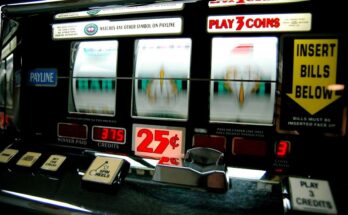
Online slots have evolved far beyond simple reels and paylines. Today’s slot systems are complex digital ecosystems powered by algorithms, machine learning, and behavioral analytics that continuously redefine how players interact, win, and engage. This article explores the deeper mechanics and hidden strategies shaping the modern slot experience—offering a view not often discussed outside the development and professional gaming analysis community.
Understanding the Algorithmic Backbone of Online Slots
At their core, online slots are governed by Random Number Generators (RNGs). Yet, the sophistication of these systems has advanced dramatically. RNGs are no longer static; they operate alongside layered probability models that enable developers to fine-tune the Return to Player (RTP) and volatility levels dynamically.
RTP Calibration and Micro-Adjustment Mechanisms
RTP (Return to Player) represents the long-term payout ratio of a slot, typically expressed as a percentage. However, many modern online casinos employ adaptive RTP engines. These can subtly recalibrate payout frequency based on aggregated play data, allowing operators to maintain statistical fairness while optimizing engagement.
Developers integrate dynamic balancing mechanisms, which track variables such as:
-
Player session duration
-
Bet size patterns
-
Frequency of bonus feature activation
-
Historical volatility tolerance
These metrics enable systems to fine-tune the perceived fairness and excitement curve, ensuring sustained play without violating regulatory RNG integrity.
The Role of Volatility Clustering in Player Retention
Volatility in slots defines the risk-reward spectrum—high-volatility slots pay less frequently but in larger amounts, while low-volatility games offer smaller, more frequent wins. Yet, few realize that volatility is not constant across sessions.
The Concept of Volatility Clustering
Volatility clustering, a principle borrowed from quantitative finance, describes how high or low variance outcomes tend to cluster together. In slots, this manifests as “hot” and “cold” streaks, which are not artificially inserted but emerge from statistical probability groupings within the RNG sequence.
Advanced developers intentionally design volatility cycles, using algorithms that track win-loss sequences to determine when a “cycle shift” occurs. This mechanism keeps gameplay psychologically compelling by introducing natural rhythms of tension and reward.
How AI Personalizes Slot Experiences
Artificial Intelligence is revolutionizing online slot design. Casinos and developers now deploy AI-driven personalization engines that analyze player behavior across thousands of spins.
Behavioral Segmentation and Dynamic Game Adaptation
AI models categorize players into micro-segments based on real-time data such as:
-
Average bet value and frequency
-
Reaction to near misses
-
Time between feature activations
-
Bonus game preferences
Once categorized, the system can alter in-game elements dynamically—including background themes, soundtracks, or bonus trigger probabilities—without compromising fairness. For example, a player who tends to exit after long losing streaks may be offered a “softened volatility pattern” during subsequent sessions to maintain engagement.
Slot Economics: How Payout Structures Drive Market Competition
While casual players focus on jackpots, professional analysts understand that the economic design of slots determines their success in the iGaming marketplace.
RTP Compression and Market Competition
In a saturated industry, developers are forced to find a balance between operator profitability and player satisfaction. Lowering RTP from 97% to 94% might seem minor, but across millions of spins, this creates massive margin differences. Hence, some studios employ RTP compression—gradually adjusting payout ratios across versions of the same slot for different jurisdictions or casinos.
Modular RTP Frameworks
Some of the most advanced slot engines utilize modular RTP frameworks, where payout logic is stored independently of the graphical layer. This allows real-time testing and region-specific customization. European markets, for instance, might feature higher RTPs due to stricter regulations, while other regions prioritize flexibility and bonus intensity.
Advanced Sound and Visual Engineering: The Psychology of Engagement
The psychological influence of audio-visual design in slot games cannot be understated. Modern titles use psychoacoustic engineering, blending specific frequency ranges and visual pacing to enhance player immersion.
Sound Frequency and Reward Anticipation
Studies have shown that high-frequency audio cues (1.5–3 kHz) stimulate arousal and focus, making reward anticipation more intense. Developers synchronize these frequencies with reel spins and near-miss events, subconsciously conditioning excitement and attention retention.
Dynamic Visual Loops
Slot animations are meticulously designed to match dopaminergic feedback patterns. The more time a player’s eyes stay within the “reward zone” (typically the center third of the screen), the stronger the neurological reinforcement of engagement. AI-driven heatmaps help designers iterate on visual loops to maximize this focus area.
Responsible Design and Ethical Boundaries in Algorithmic Gaming
As online slots grow more complex, ethical design standards have become critical. The fine line between engagement and exploitation is increasingly monitored by regulators and consumer protection agencies.
Transparent RNG Auditing
Regulators now demand third-party verification of RNG algorithms and AI-driven game logic. Transparency reports ensure that adaptive mechanisms do not cross into behavioral manipulation, especially in the case of dynamic RTP systems.
Ethical Use of Predictive Analytics
Developers must also consider player well-being indicators. Predictive models can identify early signs of compulsive behavior through data such as:
-
Rapid increase in betting frequency
-
Deviation from usual session durations
-
Repeated engagement after significant losses
When detected, systems can intervene—reducing volatility or suggesting cooling-off periods—to encourage responsible play.
The Future: Blockchain and Transparent Randomness
The next frontier in online slot technology lies in blockchain-based RNG systems. By recording each RNG seed and result on a public ledger, developers can create provably fair slots with verifiable transparency.
Smart Contract Integration
Blockchain-based slots can leverage smart contracts to automate payouts instantly without human intervention. This reduces operational costs while fostering trust among high-value players and professional analysts who demand proof of fairness.
Tokenized Reward Systems
Future ecosystems may introduce tokenized gameplay rewards, where players earn tradable digital assets through milestones rather than simple monetary payouts. This model blends decentralized finance with entertainment, shaping a new generation of hybrid slot economies.
FAQs About Advanced Online Slot Mechanisms
1. What differentiates adaptive RTP systems from fixed RTP slots?
Adaptive RTP systems use real-time analytics to adjust payout probabilities within approved limits, while fixed RTP slots maintain a static payout model throughout.
2. Can volatility patterns really be influenced by AI?
Yes. AI can modulate perceived volatility by adjusting bonus frequency or symbol distribution probabilities based on player segmentation, enhancing engagement while remaining statistically fair.
3. How do developers ensure fairness if AI is involved in slot design?
Fairness is ensured through independent audits, ensuring that no algorithm directly alters outcome probabilities outside pre-approved parameters.
4. Why do some players experience repeated “near misses”?
Near misses are a psychological design element. They are statistically random but often appear more frequent due to pattern-recognition bias reinforced by sound and visual cues.
5. Are blockchain-based slots already in operation?
Yes, several iGaming platforms are experimenting with blockchain RNGs, offering verifiable transparency and open-source fairness proofs.
6. What is volatility clustering, and how does it affect wins?
Volatility clustering causes wins and losses to appear in streaks, creating natural cycles of excitement and tension without artificial manipulation.
7. How will AI and blockchain together change the future of online slots?
The fusion of AI personalization with blockchain transparency will create slots that are both adaptive and provably fair, reshaping trust and engagement in the online gaming world.
Final Word: The online slot industry is no longer a simple game of chance. It’s a convergence of mathematics, psychology, and technology—an evolving digital arena where algorithmic sophistication defines success. As AI, blockchain, and ethical design continue to mature, the future of online slots promises not only greater transparency but also deeper, more personalized entertainment experiences.