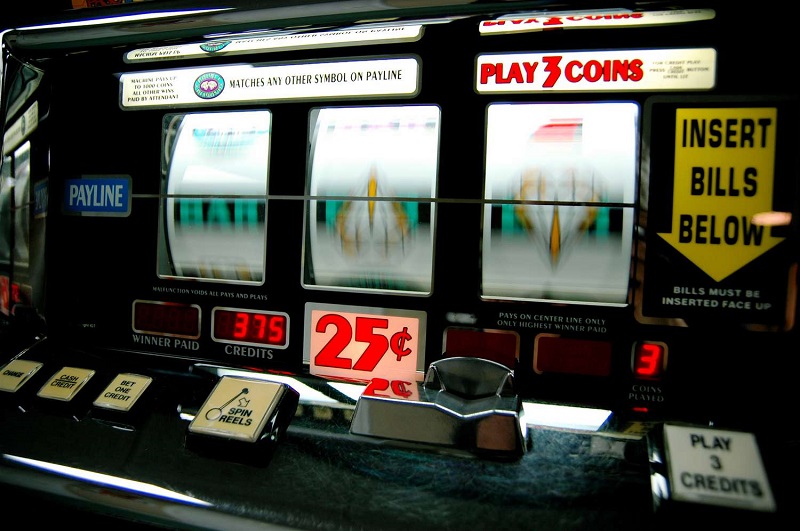
Walk through any modern casino, and you will pass rows of slot machines sitting in what appears to be a state of suspended animation. Their neon displays pulse with vibrant attract sequences, celebratory sound effects loop at gentle volumes, and digital characters wink from ultra-high-definition screens. To a passerby, an empty cabinet seems to be waiting for a player to slide in a bill and press the spin button before doing any actual work.
In reality, that machine is never at rest. Deep inside the tamper-evident logic box mounted in the cabinet’s steel chassis, a dedicated microprocessor is executing millions of calculations every minute. At the center of this tireless processing lies the Random Number Generator (RNG). Understanding that this mathematical engine operates on an uninterrupted, high-frequency loop is the single most important concept in understanding modern slot mechanics, dismantling persistent gambling folklore, and appreciating the sheer sophistication of regulated gaming technology.
The Nature of the Mathematical Engine
In legal, regulated gaming jurisdictions, the term Random Number Generator almost universally refers to a Pseudo-Random Number Generator (PRNG). The prefix “pseudo” is not an admission of weakness or a sign that the outcomes are rigged; rather, it reflects a foundational reality of computer science. True randomness requires an unpredictable physical phenomenon, such as atmospheric noise or radioactive decay. Pure software algorithms, by their nature, are deterministic sets of mathematical instructions.
To produce results that are functionally indistinguishable from physical chaos, gaming engineers combine complex algorithmic formulas with unpredictable data inputs known as seeds. The seed often pulls from fluctuating hardware states, such as internal clock counts measured down to the nanosecond, thermal variations on circuit boards, or volatile system memory registers.
Once seeded, the algorithm runs through dense mathematical operations, such as modern variants of the Mersenne Twister or cryptographically hardened linear congruential algorithms. The output is an unending sequence of vast integers, typically ranging from zero to several billion. These numbers are generated with uniform statistical distribution, meaning that every possible integer within the defined range has an identical mathematical probability of appearing on any given calculation.
The Relentless Cycle: Why the Numbers Never Stop
A widespread misconception among casual players is that the RNG springs to life only when someone initiates a bet. Many imagine a dormant program waiting in standby mode, firing off a single calculation the moment a finger touches the glass.
The reality is that the RNG cycles continuously from the second the machine boots up. Whether a guest is mid-spin, reading the paytable rules, ordering a drink from the service console, or walking past an empty chair at four in the morning, the algorithm churns out numerical values at rates typically between hundreds and thousands of times per second.
Engineers design slot software this way for several critical reasons:
-
Preventing predictive timing exploits: If a machine calculated numbers at fixed intervals or only upon receiving a bet command, sophisticated bad actors with hardware monitoring gear could theoretically time their wagers to target favorable outcomes. Continuous, high-speed calculation introduces an impenetrable barrier of temporal entropy.
-
Preserving true event independence: Running an uninterrupted numerical stream ensures that consecutive wagers made by a human hand have no practical mathematical connection to one another. The gap between two button presses—even if executed as rapidly as possible—spans thousands of discarded numerical cycles.
-
Eliminating memory states: A continuous generator maintains no memory of previous values. It does not track how much money entered the bill validator, nor does it know how long a player has occupied the seat. Every fraction of a second brings an entirely fresh slate of values unrelated to the ones that preceded them.
The Moment of Truth: The Millisecond Snapshot
If the algorithm is churning through thousands of numbers every second, how does a wager actually resolve? The entire process hinges on a split-second event known as a polling command.
When a player sets their bet and hits the spin button, the game’s core operating system sends an instantaneous query to the RNG. At that precise microsecond, the processor captures the exact numbers resting in the output register.
That microsecond snapshot is the definitive outcome of the game. Everything that follows—the digital reels spinning on screen, the rising musical cadences, the near-miss graphics where a jackpot symbol lands just above the payline, and the mechanical thud of physical reels stopping in sequence—is pure presentation.
The visual display is essentially a dramatized pantomime designed for human entertainment. The machine knew the final state of the board, the winning paylines, and the exact payout amount within a few thousandths of a second after the button was pressed.
This mechanical reality illustrates why timing myths fail. If a player hesitates for even a tenth of a second to take a sip of coffee or scratch their nose before pressing the button, they interact with an entirely different point in the continuous numerical stream. The hand that won a progressive jackpot at 9:15:32 PM would have generated a completely different losing screen had the player pressed the button just three milliseconds earlier or later.
Translating Raw Math into Visual Reels
An integer with ten digits means nothing to a player looking for cherries, bars, or scatter symbols. To turn abstract calculations into a coherent game, the machine utilizes an internal lookup mechanism known as a virtual reel mapping table.
Early mechanical slot machines from the mid-twentieth century were physically constrained by their metal drums, which typically held ten to twenty-two stops per reel. Modern digital machines bypass physical limitations entirely by assigning thousands of virtual stops to an imaginary wheel.
The process operates through straightforward modular arithmetic:
-
The RNG produces a series of massive numbers—one for each reel in play.
-
The game program divides each number by the total count of virtual stops on that specific reel.
-
The remainder of that division corresponds to a specific coordinate on the virtual strip.
-
The software checks its lookup table to identify which physical or graphic symbol occupies that coordinate.
This mapping mechanism allows game designers to manipulate symbol weighting with extraordinary precision. A common blank or low-paying card symbol might be assigned to hundreds of virtual stops across the spectrum, while a top-tier bonus scatter or progressive jackpot icon might occupy only a single virtual stop out of tens of thousands.
Because the RNG selects virtual stops with equal probability, the disparity in assigned stops creates the exact mathematical return-to-player (RTP) percentage mandated by the game’s design, all while displaying reels that appear visually balanced to the player.
Deconstructing Common Floor Myths
Understanding that an RNG runs continuously dismantles nearly every superstition circulating among casino visitors.
The Myth of the “Due” Machine
Because the RNG operates without memory, streaks are merely statistical variance occurring across massive sample sizes. A machine that has gone five hundred spins without awarding a bonus round is not “primed” to pay out. The probability of landing a feature on the very next spin is mathematically identical to the probability on the first spin of the morning. The generator does not compensate for cold runs, nor does it tighten up after delivering a substantial hand-pay.
The Myth of the Skill Stop
Many modern video slots feature a button that allows players to halt the reel animations prematurely. Some believe that pressing this stop button with impeccable hand-eye coordination enables them to catch winning symbols as they pass. In truth, because the outcome was locked in at the microsecond of the initial wager, pressing the stop button does nothing more than abbreviate the visual playback. It speeds up the arrival of an outcome that was already settled.
The Myth of Casino Counter-Programming
Players often speculate that casino managers alter payout percentages remotely from a back office when the floor gets busy on a Saturday night. In regulated jurisdictions, modifying a slot machine’s payout profile requires strict administrative procedures, comprehensive auditing, and often physical chip verification or formal electronic logging that cannot be enacted mid-session to target active players. The RNG runs its certified mathematical code unimpeded, indifferent to the day of the week, the size of the crowd, or the denominations being played.
Auditing and the Standard of Independent Verification
Casinos do not build their own RNG software, nor are they permitted to run unverified algorithms. Before any slot cabinet or digital platform can debut on a gaming floor in jurisdictions like Nevada, New Jersey, or Native American tribal lands, the software must undergo grueling technical testing by accredited, independent laboratories such as Gaming Laboratories International (GLI) or BMM Testlabs.
Engineers at these facilities subject the RNG code to battery testing, running billions of simulated outcomes through advanced statistical checks. These evaluations verify that the sequence shows no mathematical bias, no predictable cyclical loops, and complete non-correlation between successive outputs. Only when an RNG proves that it behaves with absolute unpredictability across astronomical sample sizes does regulatory authorities grant approval for public deployment.
The Unseen Rhythm of the Casino Floor
A slot machine may project an image of simple chance wrapped in bright lights and catchy audio, but beneath that exterior lies a marvel of computational discipline. Long before a bettor approaches the cabinet and long after they walk away, the internal generator continues its quiet, ceaseless race through the numbers. Every outcome is an unrepeatable snapshot of a moving mathematical river—a testament to how modern gaming transforms complex digital calculations into the simple, universal thrill of a spinning reel.