Every wager begins with a split-second narrative. A bettor glaces at an NFL point spread, watches a roulette wheel spin down to its final rotations, or stares at a river card in a high-stakes poker hand. In that suspended moment, the decision to commit money feels deliberate, analytical, or guided by sharp intuition. Yet beneath the veneer of calculated logic, the human mind is navigating a labyrinth of ancient cognitive wiring, biochemical impulses, and subconscious biases.
Wagering has never been an exercise in pure mathematics. If it were, the global gaming industry would collapse under the weight of rational indifference. Instead, betting persists as one of the clearest windows into human decision-making under uncertainty. To understand why people place bets, double down after heartbreak, or trust a gut feeling over cold statistics, you have to look past the odds board and examine the psychological machinery running behind the bet.
The Dopamine Engine: Anticipation Over Outcome
Most people assume the primary emotional payoff of gambling is the win itself: the rush of collecting chips, the digital confetti on a smartphone screen, or the satisfaction of an underdog covering the spread. Neuroscience tells a strikingly different story.
The brain’s reward architecture relies on dopamine, a neurotransmitter long associated with pleasure. However, modern neurobiology reveals that dopamine surges most intensely not when a reward is received, but during the period of maximum uncertainty. Dopamine is the molecule of anticipation. When an outcome is a fifty-fifty coin flip, dopamine release peaks.
This mechanism explains why the sweat of a live bet often feels more intoxicating than the eventual payout. A bettor staring at a game tied in the fourth quarter is experiencing a sustained chemical cascade. The physiological state of suspense—dilated pupils, accelerated heart rate, hyper-focused attention—is itself the product being consumed. Winning provides closure, but uncertainty provides the fuel.
The Illusion of Control and the Myth of Skill
One of the most pervasive forces shaping betting behavior is the illusion of control: the subconscious belief that personal agency can influence an inherently random outcome.
On casino floors, this illusion manifests in physical rituals. Craps players throw dice softly when they need a low number and fling them violently against the back wall when hunting for a high roll. Lottery players routinely agonize over picking birthdays and lucky numbers, convinced their curated selection carries better odds than a quick pick generated by a machine.
In sports betting and financial speculation, the illusion takes an intellectual form. Because bettors have access to injury reports, weather conditions, historical matchups, and advanced analytics, they frequently confuse information acquisition with predictive control. Knowing every statistic about a quarterback does not eliminate the chaotic physics of a fumbled football or a gust of wind deflecting a field goal. When extensive preparation collides with fundamental variance, bettors often double down on their analysis rather than accepting that randomness simply had the final word.
The Near-Miss Effect
Few psychological triggers distort perspective quite like the near-miss. In traditional slot machines, this occurs when two jackpot symbols align on the payline while the third lands just a fraction of an inch above or below. In sports betting, it takes the form of a four-leg parlay failing because of a meaningless buzzer-beater in garbage time.
Objectively, a near-miss is a complete failure. A ticket that misses by one point returns the exact same monetary value as a ticket that missed by fifty: zero.
Yet functional neuroimaging shows that the human brain processes near-misses almost identically to actual wins. Instead of registering defeat, the cognitive system interprets the event as an encouraging indicator of proximity. The mind frames the outcome not as “I was wrong,” but as “I was so close, my strategy is working.” This subtle misinterpretation resets the player’s motivation, encouraging them to jump back into the action immediately.
Cognitive Traps: The Gambler’s Fallacy and the Hot Hand
Human pattern recognition is an evolutionary marvel that helped early ancestors track prey and spot seasonal shifts. When applied to modern probability, however, that same pattern-seeking engine misfires in predictable ways.
The most famous misfire is the Gambler’s Fallacy, the belief that past independent events influence future random occurrences. If a roulette wheel lands on red seven consecutive times, a crowd will inevitably rush to bet heavily on black, convinced that the laws of equilibrium make black overdue. In reality, the wheel has no memory. The odds of the ball landing on red on the eighth spin remain identical to the first.
Running parallel to this error is the hot-hand fallacy. When a sports bettor strings together four consecutive winning days, they rarely attribute the run to positive variance. Instead, they credit a sudden transcendent ability to read the market. This phantom momentum breeds overconfidence, leading players to abandon strict bankroll limits, escalate wager sizes, and take uncharacteristic risks precisely when mathematical regression toward the mean is most likely to strike.
Loss Aversion and the Destructive Architecture of Chasing
In the foundational framework of behavioral economics known as prospect theory, researchers demonstrated that human beings feel the pain of a loss roughly twice as intensely as they enjoy the pleasure of an equivalent gain. Losing one hundred dollars hurts far more than winning one hundred dollars feels good.
This asymmetrical wiring creates a dangerous psychological trap known as chasing losses. When a bettor incurs an unexpected deficit, the psychological discomfort of realizing that loss triggers acute distress. Rational risk management yields to an urgent emotional priority: getting back to even.
Under this pressure, a bettor will abandon disciplined unit sizing and make increasingly reckless wagers on unfamiliar games or late-night west-coast matchups they know nothing about. In gaming terminology, this state of emotional compromise is often called tilt. The player is no longer betting on the intrinsic value of an opportunity; they are betting to rescue their wounded ego and erase negative feelings from the ledger.
Modern Wagering in the Digital Era
The psychological drivers of wagering have existed for centuries, but modern technology has intensified their impact. Traditional brick-and-mortar casinos imposed natural physical friction. You had to convert physical cash into plastic chips, wait for dealers to shuffle cards, and navigate physical spaces.
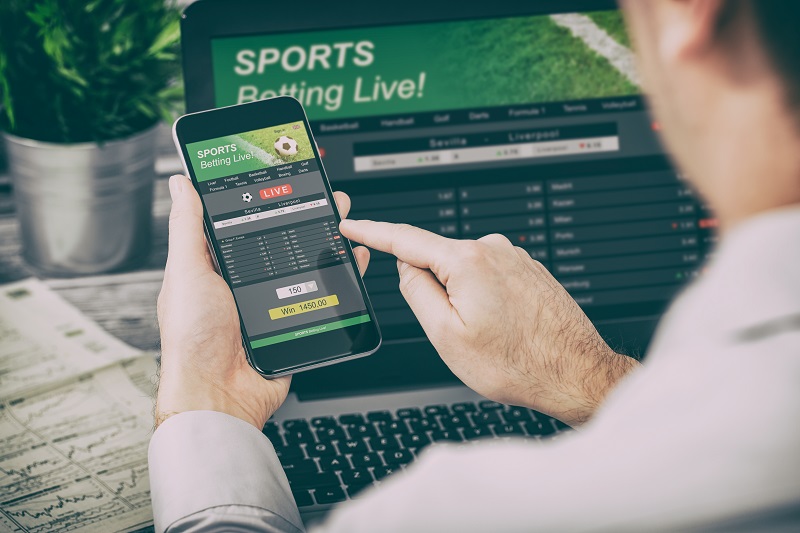
Mobile betting applications strip away every shred of that friction. Balances are represented as sterile digital numbers, detaching money from its real-world labor value. Micro-betting platforms offer real-time propositions on every single pitch, drive, or possession, shortening the feedback loop between wager and dopamine release from hours to seconds.
Navigating this environment requires understanding that the greatest adversary in wagering is rarely the house edge or the bookmaker’s vig. It is the unmonitored human psyche. The most successful bettors are not those who claim to have cracked a secret mathematical code, but those who practice radical self-awareness, construct strict mechanical rules to counteract their own cognitive biases, and recognize when their brain is confusing emotional impulse with genuine edge.